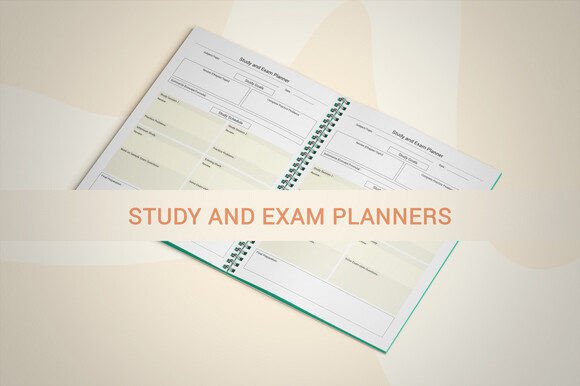
Study and Exam Planners Printable KDP: A Practical Resource for Learners, Educators, and Small Business Creators
Study and Exam Planners Printable KDP is a purpose-built digital planner designed for flexibility across personal use, classroom instruction, tutoring support, and small-scale publishing. Unlike generic notebooks or static PDFs, this resource combines functional design with commercial readiness—offering editable source files, print-optimized layouts, and a full 109-page interior formatted specifically for Kindle Direct Publishing (KDP) upload. Its practical size (8.5 x 11 inches), absence of bleed, and high-resolution output (300 ppi) make it suitable both for home printing and professional duplication.
What Sets This Planner Apart from Standard Study Tools
Most study planners fall into one of two categories: simple blank templates or highly prescriptive, rigid formats. Study and Exam Planners Printable KDP occupies a middle ground—structured enough to guide planning, yet open enough to adapt across subjects, learning styles, and timeframes. The inclusion of editable Adobe Illustrator (.Ai) files means users can modify fonts, colors, headers, or layout elements before finalizing prints or KDP submissions. That level of control is uncommon in off-the-shelf printable planners—and especially rare in resources marketed toward KDP creators.
The package also delivers multiple file types: PDF (for immediate printing or KDP upload), JPG and PNG (ideal for digital annotation or slide-based instruction), and PPTX (useful for educators building lesson plans or workshops). This multi-format approach supports diverse workflows—whether you’re a student tracking weekly revision goals, a tutor customizing materials for clients, or an independent creator preparing a low-risk KDP launch.
How It Compares to Other Planning Formats
Compared to physical bound planners, Study and Exam Planners Printable KDP eliminates inventory risk and upfront production costs. You print only what you need, when you need it—and adjust quantities based on demand. For educators or coaches, that means no over-ordering or storage concerns. For KDP sellers, it means faster iteration: if feedback suggests adding more reflection prompts or adjusting spacing for handwriting, edits can be made directly in the .Ai file and re-exported without redesigning from scratch.
Digital-only planners (like Notion templates or GoodNotes-compatible PDFs) offer interactivity but lack tactile engagement and universal compatibility. Study and Exam Planners Printable KDP bridges that gap: it’s screen-friendly for editing and annotation, yet optimized for physical use—especially important for learners who retain information better through handwriting or visual layout.
Free downloadable planners often sacrifice structure for simplicity—or vice versa. Some omit key sections like exam-day checklists, progress trackers, or subject-specific breakdowns. This resource includes consistent scaffolding across pages: spaced repetition reminders, goal-setting prompts, weekly review logs, and dedicated space for notes, deadlines, and self-assessment. The 109-page count isn’t arbitrary—it reflects a balance between comprehensiveness and usability, avoiding overwhelming density while covering core academic planning needs.
Strengths and Realistic Tradeoffs
A major strength lies in its dual-purpose design. It functions equally well as a personal productivity tool and as a commercially viable KDP interior. That versatility reduces friction for creators testing niche markets—such as “IB Chemistry Study Planner” or “NCLEX Prep Logbook”—without needing separate design tools or licensing agreements. The ready-to-upload PDF meets KDP’s technical requirements out of the box: correct dimensions, CMYK color mode, embedded fonts, and no bleed.
However, there are tradeoffs to consider. Because it’s designed for broad applicability, it doesn’t include subject-specific content like anatomy diagrams, math formula sheets, or language conjugation tables. Users seeking discipline-tailored resources may need to layer supplemental materials—or customize the editable files themselves. Similarly, while the layout supports handwriting, it assumes standard pen or pencil use; fine-tip markers or fountain pens may occasionally bleed through thinner paper stocks unless printed on 24–28 lb bond.
Another consideration is accessibility. While the PDF is print-optimized, it is not tagged for screen readers or built with WCAG-compliant contrast ratios. For users requiring accessible digital formats, manual adjustments—or alternative tools—may be necessary.
Best-Fit Scenarios: When This Planner Fits Well
This resource aligns well with several distinct use cases:
- Independent KDP creators launching low-cost, high-margin educational tools—especially those targeting test prep, semester-long courses, or credentialing exams where structured planning adds tangible value.
- Tutors and academic coaches who want reusable, customizable handouts—not just worksheets, but living documents students can update weekly and reflect upon.
- Self-directed adult learners returning to education after a break, managing multiple commitments, and needing clarity around pacing, deadlines, and retention strategies.
- Small training businesses offering certification prep (e.g., Project Management Professional, real estate licensing) and wanting branded, professional-looking materials without investing in custom design each cycle.
In these contexts, the ability to edit, reprint, and repurpose saves time and maintains consistency—something static templates or one-off designs rarely achieve.
When Another Option Might Be More Appropriate
If your priority is deep integration with digital ecosystems—such as syncing with Google Calendar, auto-populating deadlines from LMS platforms, or embedding multimedia—you’ll likely need software-based solutions rather than printable PDFs. Similarly, if you require strict adherence to institutional formatting guidelines (e.g., university thesis templates or government-mandated reporting structures), this planner serves as a starting point—not a final deliverable.
For younger students (under age 15), the layout may feel overly formal or text-dense without adaptation. Educators working with middle schoolers often benefit from more visual cues, larger writing areas, or gamified elements—features not included here but easily added via the editable .Ai file.
Finally, if you're evaluating at scale—for example, outfitting an entire school department or running a subscription service—the per-unit cost of printing and binding may eventually favor bulk-printed, professionally bound versions. In those cases, Study and Exam Planners Printable KDP works best as a pilot or prototype before committing to larger runs.
Making an Informed Choice
Choosing a study or exam planner isn’t just about aesthetics or page count—it’s about alignment with how you learn, teach, or create. Study and Exam Planners Printable KDP stands out for its intentional balance: professional-grade output without complexity, flexibility without fragmentation, and commercial utility without sacrificing personal utility. It doesn’t replace critical thinking or pedagogical judgment—but it does remove friction from execution.
Before deciding, ask yourself: Do I need full control over layout and branding? Will I use this repeatedly—or adapt it for different audiences? Am I prioritizing speed-to-market over deep customization? If yes to any of those, this planner offers a grounded, scalable foundation. If your needs center on automation, accessibility compliance, or discipline-specific scaffolding, pairing it with complementary tools—or selecting a specialized alternative—may yield stronger long-term results.
Ultimately, the value of Study and Exam Planners Printable KDP lies not in being the only option—but in being a reliably functional, technically sound, and thoughtfully structured one.