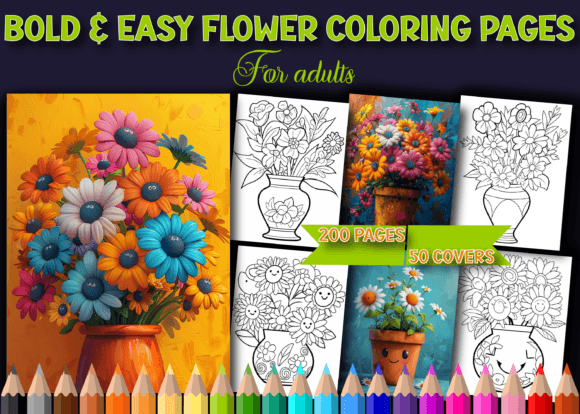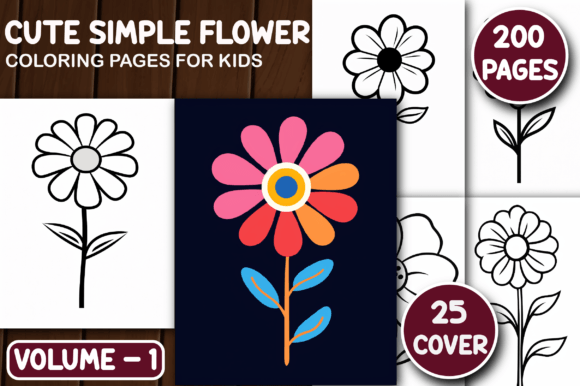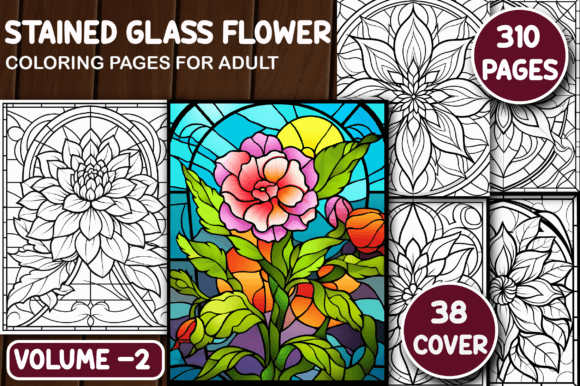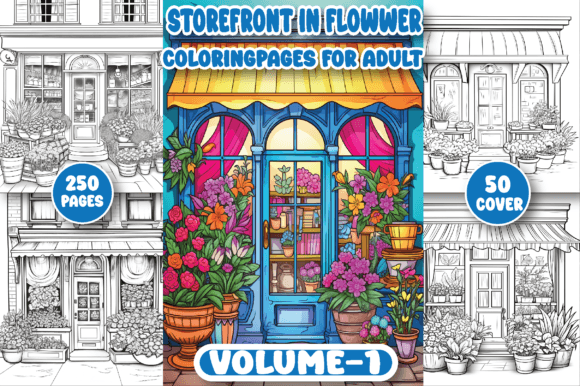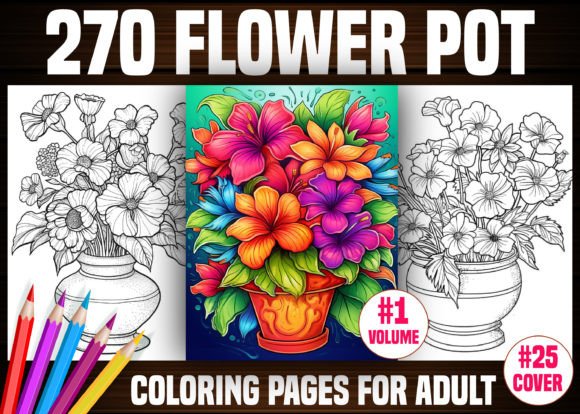
270 Flower Pot Coloring Pages - KDP
For creators building high-content books on Amazon Kindle Direct Publishing, 270 Flower Pot Coloring Pages - KDP is a production-ready asset—not just another coloring page bundle. It’s structured for efficiency, tested for platform compliance, and designed to move directly from download to publish without rework. That means less time troubleshooting file formats, DPI mismatches, or cover sizing—and more time scaling your catalog, refining your brand, or testing new niches in the adult coloring space.
Where This Fits in Your Book Creation Workflow
This resource sits at the intersection of content assembly and platform readiness. Unlike generic clipart packs or low-res downloads, 270 Flower Pot Coloring Pages - KDP arrives with precise specifications already met: 8.5″ × 11″ dimensions, 300 DPI across all JPG, PNG, and PDF outputs, and 25 professionally sized cover PNGs. That eliminates common bottlenecks—like resizing line art for bleed margins, converting RGB to CMYK manually, or rebuilding covers after KDP rejects a submission for resolution issues.
If you’re working on a themed series—say, “Botanical Relaxation” or “Garden Therapy for Adults”—these pages serve as your core interior content. You can sequence them by complexity (simple pots → intricate floral arrangements), by pot style (terra cotta, ceramic, hanging, mosaic), or by use case (mindfulness prompts, seasonal themes, or skill progression). Because each image is delivered as both JPG and PNG, you retain flexibility: use JPG for lightweight PDF interiors and PNG when transparency or layered editing matters—for example, adding subtle watercolor textures or custom borders in Canva or Affinity Publisher.
How It Integrates With Your Existing Tools and Platforms
You don’t need specialized software to use this. The PDF is print-ready out of the box, meaning it works with Adobe Acrobat, free tools like PDFescape, or even Google Docs (via import + export). For designers using Canva, InDesign, or Illustrator, the 270 individual PNG and JPG files let you batch-import, apply consistent filters, adjust contrast for optimal grayscale printing, or insert custom text overlays—without degrading line quality.
On the publishing side, it’s pre-validated for KDP. That includes proper margins (no critical elements clipped), correct color mode (grayscale, not RGB), and embedded fonts (none required—these are pure vector-style line art). If you’re using automation tools like BookFunnel for delivery or Payhip for direct sales, the ZIP contains cleanly labeled folders—“Covers,” “Interior_JPG,” “Interior_PNG,” “PDF_Final”—so your file management stays predictable across projects.
Preparation: What to Do Before You Open the ZIP
Before importing anything, define your book’s scope. Will this be a standalone volume or part of a larger set? If Volume 1 is focused on classic flower pots, consider how Volume 2 might expand into garden tools, botanical labels, or seasonal arrangements—keeping visual continuity in mind. Also, decide on your cover strategy early. The 25 included PNG covers give you options: test 3–5 variants in KDP’s previewer, use different ones for paperback vs. eBook thumbnails, or repurpose them as social media assets (e.g., Instagram carousels showing “behind-the-scenes” coloring progress).
Check your KDP account settings too. Ensure your imprint name, tax info, and royalty preferences are updated. Since this asset is ready to publish, you’ll only need to upload the final PDF and select categories (e.g., “Adult Coloring Books > Nature & Plants”)—no waiting for proofs or format corrections.
Using It During Production: Practical Adjustments That Matter
While the files are production-ready, small refinements often improve perceived value. For example:
- Consistency check: Flip through 10–15 random pages to verify line weight uniformity. These pages maintain clean, medium-weight outlines—ideal for both fine-tip pens and broader markers. If your audience skews toward beginners, consider adding a brief “Coloring Tips” intro page (one per volume) explaining paper types, blending techniques, or stress-reduction breathing paired with coloring.
- Page numbering: KDP doesn’t require numbered interiors, but adding subtle, centered page numbers (e.g., “27 / 270” in 8 pt Helvetica Light) helps users track progress—especially in longer books. Do this once in your master PDF; don’t edit 270 individual files.
- Cover pairing: Match your chosen cover’s dominant color tone to the interior’s first 10 pages. A warm terracotta cover pairs well with pots drawn in slightly bolder lines; a cool mint cover works with finer, more delicate linework. Use the provided PNG covers as a visual reference while selecting which interior pages open your book.
Post-Publication Uses and Long-Term Value
Once live on Amazon, 270 Flower Pot Coloring Pages - KDP continues to support your business beyond the initial launch. The individual JPG and PNG files let you extract single pages for email lead magnets (“Download Your Free Flower Pot Page”), Pinterest pins, or printable worksheets for educators teaching plant biology or art therapy concepts. Bloggers can embed a rotating “Page of the Week” with a short reflection prompt—building recurring engagement without creating new content from scratch.
For educators or therapists, the black-and-white format supports accessibility: screen readers ignore blank space, and high-contrast line art accommodates users with low vision when printed on off-white or recycled paper. You can also convert select pages to SVG for interactive web use—adding hover effects or animated color fills—without licensing concerns, since you own full commercial rights.
Quality Control and Efficiency Notes
This isn’t a collection scraped from free sources. Every page is original line art—no duplicated silhouettes, no mirrored repeats. You’ll notice variation in pot shapes (cylindrical, tapered, bulbous), handle styles (looped, twisted, absent), and decorative elements (stripes, dots, lattice, engraved motifs). That diversity prevents user fatigue and supports repeat purchases: readers who finish Volume 1 are more likely to buy Volume 2 if the aesthetic feels fresh—not just rehashed.
Organizationally, the ZIP uses flat naming: “FlowerPot_001.jpg”, “FlowerPot_002.jpg”, etc. That makes bulk imports into design tools reliable and avoids broken links in automated workflows. If you use Airtable or Notion to track your KDP catalog, you can paste the full list of filenames into a database column and auto-generate metadata (e.g., “complexity level,” “estimated coloring time”) based on visual cues—saving hours over manual tagging.
Realistic Implementation Timelines
Here’s what a typical rollout looks like for someone managing multiple KDP titles:
- Day 1: Download, unzip, verify folder structure and sample files.
- Day 2: Select 5 cover options, generate KDP previews, choose one.
- Day 3: Assemble PDF (import JPGs into Acrobat or use a script), add title page + optional intro, export.
- Day 4: Upload to KDP, set pricing, write description, hit publish.
No step requires illustration skills, advanced software, or external freelancers. You control timing, branding, and positioning—because the creative heavy lifting is already done.
Ultimately, 270 Flower Pot Coloring Pages - KDP functions like a modular component in your content infrastructure: reliable, interoperable, and built for iteration. Whether you’re launching your first coloring book or your fiftieth, it reduces friction where it counts—so you spend less time formatting and more time connecting with readers who reach for a pencil to slow down, focus, and create.